Myths - fantastical stories or nuggets of lasting history?
THE A-Z OF BRITISH FOLKLORE
The United Kingdom is 94,354 square miles. In comparison to many nations, it’s not that big! Yet, size isn’t everything when it comes to our mythological creatures. Their stories are everywhere and in large numbers. You have to wonder if these stories have nuggets of truth, events that actually happened but which have been warped in the retelling over time.
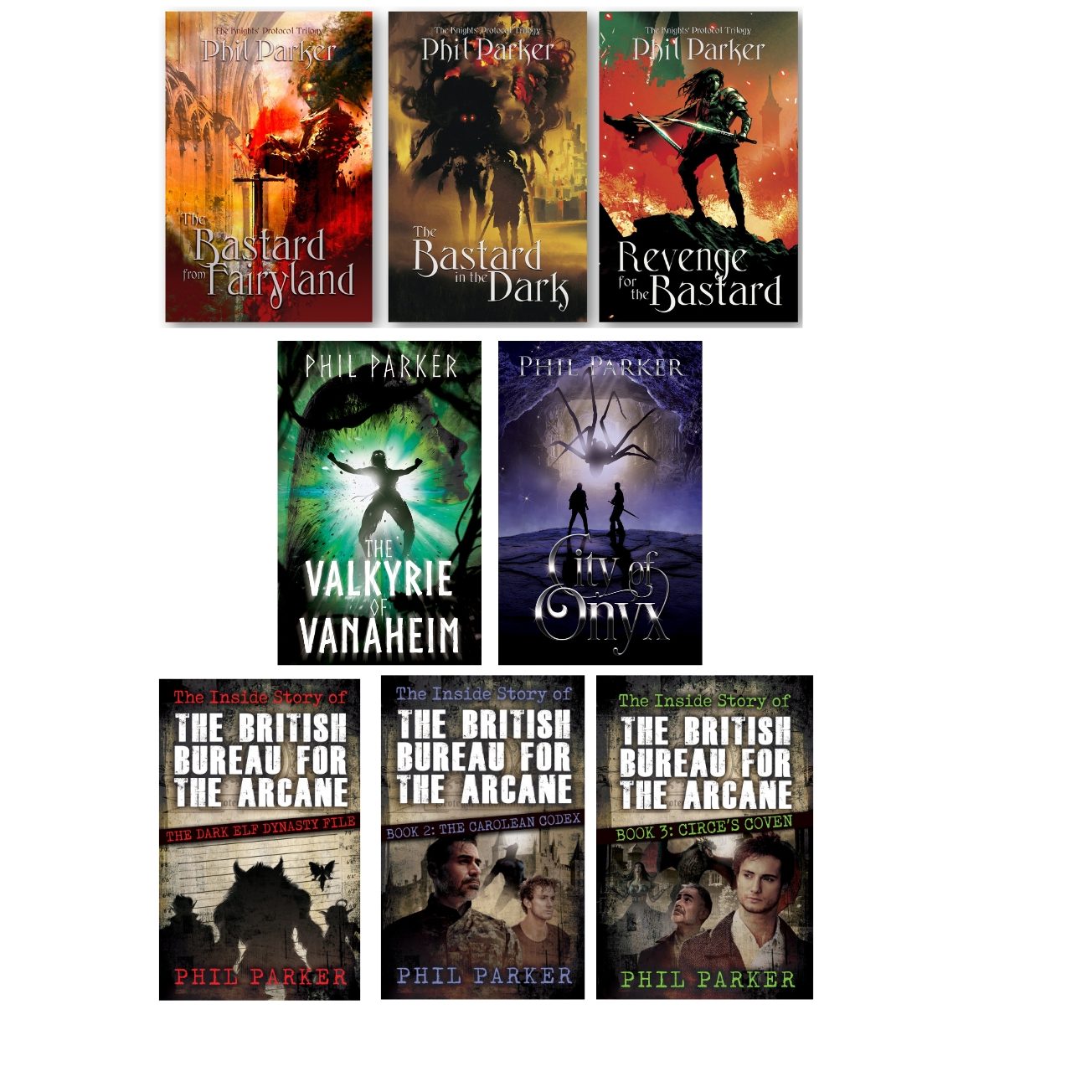
This information is a result of research for my noir fantasy series, The Inside Story of the British Bureau for the Arcane. This branch of the British Secret Service protects the public from supposedly mythological creatures. Reviewers frequently praise the way I weave British folklore into the stories. I love writing these tales for the reason mentioned in the opening paragraph –imagining how such beings might still exist and are ‘managed’ by a government agency. Unsurprising then that one reviewer described these stories as “the fantasy version of Men in Black”. Another defined them as “urban fantasy James Bond”.
A
Asrai - This is an aquatic fairy in English folklore, invented by Scottish poet Robert Williams Buchanan, 1872, “The asrai are pale, gentle beings, older than humanity, who fear light and live beneath a lake” They live in freshwater lakes, a variation on mermaids and selkies.
B
Brownie - A brùnaidh or gruagach (Scottish Gaelic), is a household spirit or hobgoblin from Scottish folklore. The ideal accessory for anyone who likes a neat and tidy home.
Banshee - The bean sidhe is an Irish female fairy whose scream warns of impending death. In Scotland she’s called the bean nighe, she washes blood from the clothes of those who are about to die. A drastic means of getting your laundry done.
Bugbear - Thomas Nashe in Pierce Penilesse (1592) referred disparagingly to “Meere bugge-beares to scare boyes,” Edward Topsell, in his History of Foure-footed Beastes (1658) described “Certaine Lamiæ which, like Bug-beares, would eat up crying boies.” Since then ‘bugbears’ have entered our vocabulary as anything which irritates or annoys but the derivation is much darker. Also called Buggaboos, later Bogeymen, they were frightening creatures intent on causing harm to people – a rhyme recorded in the Berwick area defines them as murderous. The Wycliffe Bible translation of 1395 describes them as scarecrow like in appearance with waxy skin.
Big Grey Man - The Am Fear Liath Mòr is Scotland’s answer to the Sasquatch or Yeti. It is covered in grey hair found on Ben Madui, the second highest mountain in Scotland (1,309 metres above sea level). First reported by scientist and climber J Norman Collie, he described his experience in 1925. In 1943 a solider, Alexander Tewnion, encountered several of these creatures which tried to attack him, so he ran away.
C
Christchurch Dragon - Apparently, the citizens of this Dorset town are largely unaware of this legend. The event is first referenced in a 12th century French manuscript by Hermann de Tournai where it describes delivery of canons from Laon cathedral. The French delivery drivers described seeing a 5-headed dragon destroy the church and then the whole town. This description is later recounted in other French documentation, one version in the national library.
Coblyn - Welsh gnomes found in mines, related to the leprechaun (Knockers in Cornwall/Devon
Cu Sith (coo shee)- Found on the west coast of Scotland, this is a malevolent fairy dog, with dark green shaggy fur and a braided tail coiled over its body. If it sees you it barks three times, the first two are warnings, the third is “Dinner time!” If you find one of its teeth, it is supposed to bring you luck. (Unless the teeth are embedded in you, I assume!)
D
Dwarves - Derived from Germanic folklore, stories of dwarfs vary significantly throughout history; however, they are commonly, but not exclusively, presented as living in mountains or stones and being skilled craftspeople.
Droch-fhuil -This Gaelic phrase means “evil blood” and defines British & Irish vampires. John Polidori’s (physician to Lord Byron) story (1819) Vampyre was based on the legend and was published after that historical holiday spent with Byron and Mary Shelley. Bram Stoker’s Dracula (1897) is supposed to be named after this creature, though the means of killing one didn’t involve stakes through the heart, crucifixes but burying it beneath a heavy stone!
E
Elf - Originating from north Germanic folklore as well as in Iceland’s Prose Edda, they are referenced in James I defining book on all things supernatural, Daemonologie. Seen as beautiful beings, they lived in places of great beauty too, reflected in Old English words like aelfsciene (“elf-beautiful). Medieval folk tales tell of trips to Elphame or Elfland. The Saxon term for elf meant ‘pale one’. Neolithic flint arrow-heads were once called ‘elf shot’ because people any sharp pain that had no obvious cause was from being shot by an elf. Norse legend divided the race into Light and Dark Elves, the latter blamed for causing nightmares.
F
Fairy Queen - This is a massive area so I’ve selected a few examples. Shakespeare referenced Titania and Mab who were queens of the Tuatha Dé Danann. Arthurian legend (c/oThomas Mallory) named Morgan le Fey as their queen whereas Geoffrey of Monmouth’s Vita Merlini, called her Morgen, chief of the Nine Magical Sister Queens.
Fad Felen - An unusual one, based on a real event! This is a Welsh creature, an ugly hag with yellow eyes, hair and teeth, to breathe in her breath meant death. She is linked to the Yellow Plague that occurred in 526-547 CE, a poisonous yellow cloud appeared but then vanished, never to be seen again.
G
Girt Dogs - Stories of large, black dogs (usually with red eyes) exist everywhere in the UK, only their names vary depending on location: such as Barguest, Moddey Dhoo, Gwyllgi, Black Shuck, Dando dogs & Devil dogs. Girt dogs is a Cumberland reference after a killing spree of farm animals in 1810. See also Cu Sith. See Wild Hunt also.
H
Hobgoblins - Derived from a northern England word, ‘hob’ which dates back to 1530 and taken to mean a demon. Sometimes seen as Brownies (see above), they took many forms. Shakespeare (again) describes Puck as one in A Midsummer Night’s Dream. The word ‘hobb’ can be found in lots of mystical places for this reason (eg Quatermass & the Pit)!
Herne the Hunter - Originally a ghostly poacher who haunted Windsor forest (and mentioned by Shakespeare (again!) in The Merry Wives of Windsor. Herne morphed into a character with antlers who in British myth led the Wild Hunt. He’s also Cernunnos, the Celtic god as the Welsh king of the fairies, Gwyn ap Nudd. A fascinating myth.
I
It - A bizarre story about a creature from Shetland, referenced in a 1932 book on the islands’ lore, that changed its appearance so frequently, no one gave it a name. It appeared as an animal, a headless human and a bag of wool.
J
Jack Frost - Originating from Anglo-Saxon custom, he’s a variation of the Old Man of Winter who is mentioned across Europe and Russia. He was first referenced in Round About Our Coal Fire in 1734.
K
Korrigan - The name and their dwarf-like appearance come from descriptions originating in Brittany and from there, to other Celtic cultures. Théodore Claude Henri, vicomte Hersart de la Villemarqué, wrote about them in his 1839 anthology of folk tales where a Korrigan (also called a Nain) are treated as fairies. That said, in The Fairy-Faith in Celtic Countries by W.Y. Evans-Wentz Korrigans are connected to watery locations like rivers and lakes. They possess the same hypnotic ability as the Sirens mentioned in Homer’s Odyssey. They are female and possess voices capable of entrancing anyone who hears their voice. In Cornwall their name changes slightly to Korrigs or Korriks. The concept of a supernatural creature, whose voice ensnares the listener, can be found in several cultures and always attributed as a sexual device to lure men to their doom.
Kelpie - A shapeshifting water spirit in Irish and Scottish folklore, this grey/white horse-like creature doesn’t transform completely but may retain its hooves which is why it was feared as a demon, as in Robert Burns Address to the Devil, 1786.
L
Lambton Worm - At last! Our first dragon story. The story hails from County Durham where the young John Lambton discovers a small salamander-like creature and saves its life then forgets about it. The creature grows, eats farm animals in the process, until the much older John has to kill it. Except he can’t, without magic. He strikes a deal with a local witch but doesn’t fulfil it all. He kills the worm/dragon but his family is cursed. (The next three generations did die in horrible ways!)
M
Morgens - This is a Welsh water spirit that drowns their victims. The oldest reference comes from the classic source of Vita Merlini by Geoffrey of Monmouth.
Merlin - We can’t talk about Geoffrey of Monmouth without including King Arthur’s wizard. His Brythonic name is Myrddin and he’s first referenced by the 9th century Welsh monk Nennius. He describes how a young man senses two dragons beneath a castle and helps to remove them (a red and white dragon, symbolising Welsh and Saxon loyalties). Nennius goes on to claim Merlin was the son of a demon, sent to infect humanity with evil but his upbringing changed him. He used his magical abilities for good. So, Disney, how are you going to portray this version of Merlin, eh?
N
Nixie - A shapeshifting water spirit, like Scottish Kelpies, in Old English called a Nicker (no jokes please!). Lots of malicious individuals fit this profile – Jenny Greenteeth, Peg Powler and the Grindylow (Grendal in Beowulf).
Nuckelavee - Unpleasant drawings can be found of this skinless centaur-like creature, its sinews are rotting, it oozes yellow blood and smells of burnt seaweed, found in Orkney.
O
Ogre - Back to Geoffrey of Monmouth (1136) who defined this cannibalistic monsters as the inhabitants of Britain before the arrival of humans. Their stories exist across Europe, Italian stories from the 14th century call them orcus¸in Old English in Beowulf they are orcneas and likely the source for Tolkien’s orcs.
P
Púca - More shapeshifting creatures, called pwca, pooka, phourka and puck, depending on where you are in the UK and Ireland. The Irish author Thomas Croker described them as ‘wicked-minded, black-looking’ but Shakespeare (again!) said “sweet Puck” from merely mischievous. They could transform into animals as part of the trickery.
Pyewacket - No list of UK myth is complete without mentioning the Witchfinder General, Matthew Hopkins. In 1644, in Essex, his interrogation identified a cat who the “witch” (or vulnerable, outcast woman) called Pyewacket as her familiar. The animal has featured in lots of stories ever since, on film and TV.
Piskies - Cornish hobgoblins found around mines, they enjoyed abducting humans, leaving them befuddled, especially if they were found on ley lines, energy conduits which connected fairy forts. Befuddlement that had nothing to do with drinking cider!
Pixies – are the Devon version of this race but different in behaviour. They are mischievous rather than harmful, preferring to frighten and irritate. Their first mention can be found in The Borders of the Tamar and the Tavy by Anna Eliza Bray in 1837 – rivers that border Cornwall. Makes you wonder if this story nabbed the Cornish myth to claim it for the good people of Devon! Elf-like in appearance they conventionally dressed in green.
Q
Questing Beast - From Arthurian legend primarily (also myths from France), so called because of the baying noise it made, from its young in its swollen belly. Description varies but Mallory said it had the legs of a stag, thighs and tail of a lion, body of a leopard and head of a snake. Not recommended as a pet.
R
Redcap - A murderous goblin in Border folklore, it soaked its cap in the blood of its victims. A short, thickset old elf with long, prominent teeth, skinny fingers with talons, large red eyes, iron boots and a pikestaff. Sir Walter Scott mentioned one in Ministrelsy of the Scottish Border.
S
Spring-Heeled Jack - A wonderful myth from old London town, of a demon-like figure whose attacks involved leaping over high buildings. When pursued, he emitted blue and white flames. His infamy began in 1838 and struck fear in everyone because of his bizarre behaviour and appearance (he was seen lots of times). The Duke of Wellington, aged 70, took to his horse to hunt him down and despatched the army to hunt him down. By the 1860s, there were similar characters all over England! He was never caught.
Selkie - Shapeshifting creatures in Scottish folklore who transform from a seal by shedding their skin. They are also found in myths in Iceland, the Sami people of Finland and the Chinook people of west coast America.
T
Tiddy Mun - Bog spirit with an ability to control water and mists, also bring droughts and pestilence if angered. Size of a 3 year old, appearance of an old man with long white hair and beard. When Lincolnshire fens were drained (17th century) the Tiddy Mun caused disease to destroy whole villages. To appease them people left out food. Also called Yarthkins and Greencoaties.
Tylwyth Teg - The collective term for Welsh fairy folk.
U
Unseelie Court - The Scottish version of the two courts of the fae, the other is the Seelie Court. This is also the Dark (or Winter) Court, representing the darker side of fairy nature, often allied to witches. Tradition goes that to speak their true name aloud was to summon them at your peril. They’re referenced in the Scottish ballad, Tam Lin (1549).
V
Vaugh - A malevolent water spirit from Sutherland, Scotland, the females were known to mate with human men, their offspring would have a mane or a tail.
W
Witches – It might be argued the first witch in British culture is Hecate, the Greek goddess of witchcraft, the night, moon, ghosts and necromancy who appeared briefly in Shakespeare’s Macbeth. Johannes Hartlieb (1410-1468) was a Bavarian physician whose Artes Magicae contains the oldest known description of witchcraft – nigromancy (demonic magic of the late Middle Ages), geomancy, hydromancy (magic using water, such as scrying), Aeromancy (divination using air, such as throwing dirt or seeds into the air to obtain meaning), pyromancy (divination using fire), chiromancy (palm reading), scapulimancy (divination using animals’ scapula). The persecution of witches is well documented - the Witchcraft Act of 1542 made the crime punishable by death. It was repealed five years later but restored in 1562. King James I introduced another in 1604 linked to his text Demonology. This law transferred crimes from the church to the law courts. 513 ‘witches’ were put on trial, 112 executed, the last one in Devon in 1685.
Wild Hunt – found in cultures from eastern Europe to the Celts in Ireland and Brittany, it is a hunting party of ghostly or supernatural entities. Originally led by deities from the local religions – such as Odin or Siegfried (the famous Germanic hero) and even Gwyn ap Nudd from Welsh myth. Jacob Grimm developed the stories in his work of 1835. From the English perspective, the Wild Hunt is mentioned in the Peterborough Chronicle, with an account of the Wild Hunt's appearance at night, prompted by the unpopular appointment of the abbot for the monastery, Henry d'Angely, in 1127. Their nightly appearances went on for nine weeks, ending only as Easter arrived. In certain parts of Britain, the hunt consists of hell-hounds chasing sinners or the unbaptized. (See Gurt Dogs)
Wirry-cow - A generic term in Scotland for goblins, ghouls or ghosts, sometimes also used for the Devil or a scarecrow. The term derives from an 1808 reference meaning harassment, Sir Walter Scott used the term in his novel Guy Mannering.
Wulvers - Scottish werewolves, wolf heads and human bodies though they were kind and liked to live along, catching fish of the coast of the Shetlands. This story was later found to be a recent invention of a local storyteller
X
Xhindi - Allow me some licence here, there isn’t any creature with this letter so I’ve included an Albanian branch of Elves, creaking doors and flickering lights give them away.
Y
Yallery Brown - A Lincolnshire folk tale of a fairy-like spirit that looked like a small, old man with yellow-brown skin who grants a boy a wish that backfires on him, akin to the Sorcerer’s Apprentice.
Z
Zennor’s Giant and Mermaid - The Cornish coastal village boasts two folk tales. One of a Cornish giant who protected the villagers from other giants in the area. The other of a singing mermaid who fell in love with Mathey Trewells also had a good singing voice. They both disappeared and were never seen, or heard, again.